
Intent disappears fast
“I should go work out” is easy to postpone when there is no one else expecting you.
From “who wants to go with me?” to a social coordination product built around real plans, real timing, and people nearby.
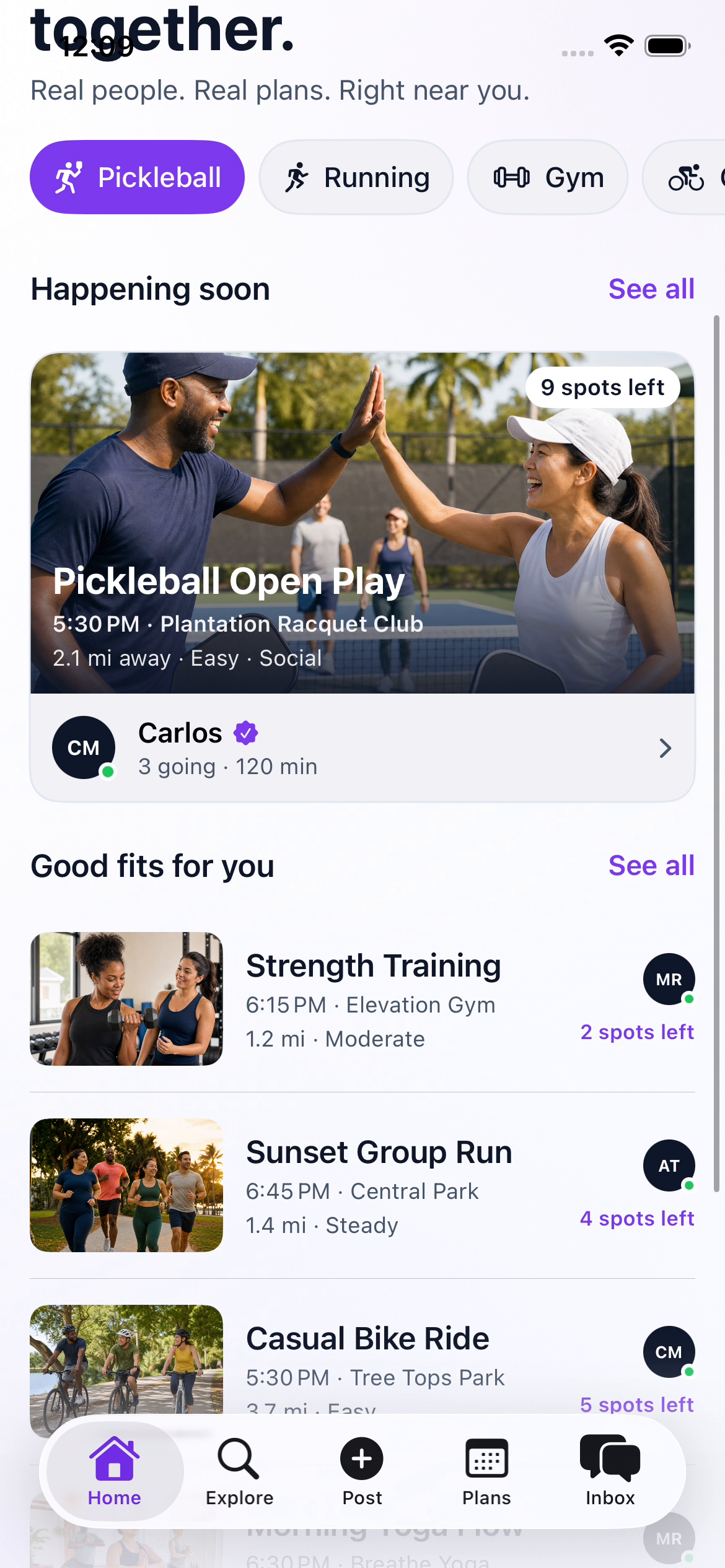
The idea started with a repeated real-world problem: people want to walk, run, lift, play pickleball, or simply get out of the house, but the hardest part is often finding someone nearby who is available at the same time.
The product opportunity was not to create another fitness tracker or another profile-browsing network. It was to make ordinary activities joinable.
See the Alongside experience move from discovery to real-world coordination.
“I should go work out” is easy to postpone when there is no one else expecting you.
A perfect activity match is not useful if the other person is never free when you are.
Too much messaging, planning, and uncertainty can kill an activity before it starts.
Instead of asking users to build a social graph first, Alongside starts with something concrete:
“I’m doing this, at this time, in this place. Want to come?”
That decision shaped the feed, plan details, join flow, creation flow, and trust model.
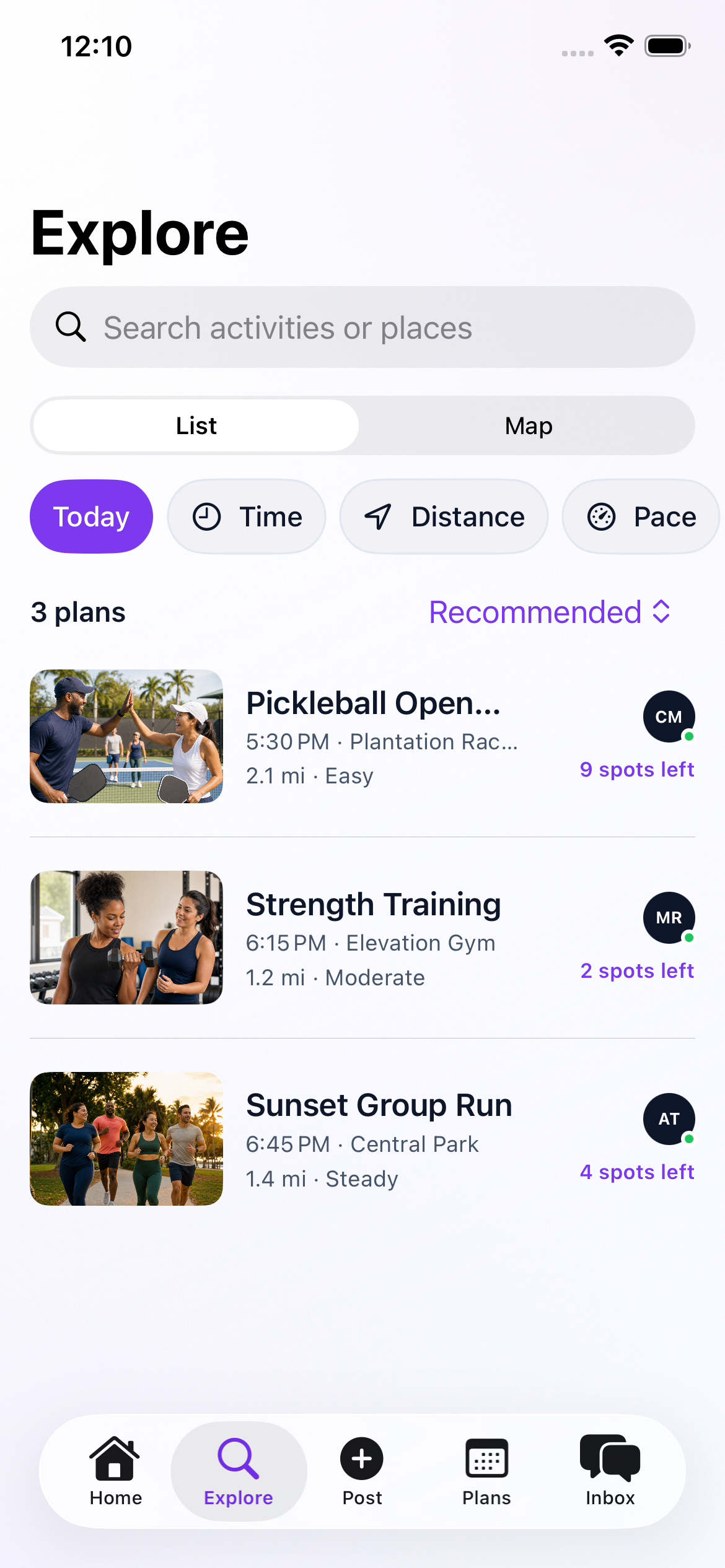
The home feed emphasizes activity, time, distance, pace, host, and remaining spots instead of generic profiles.
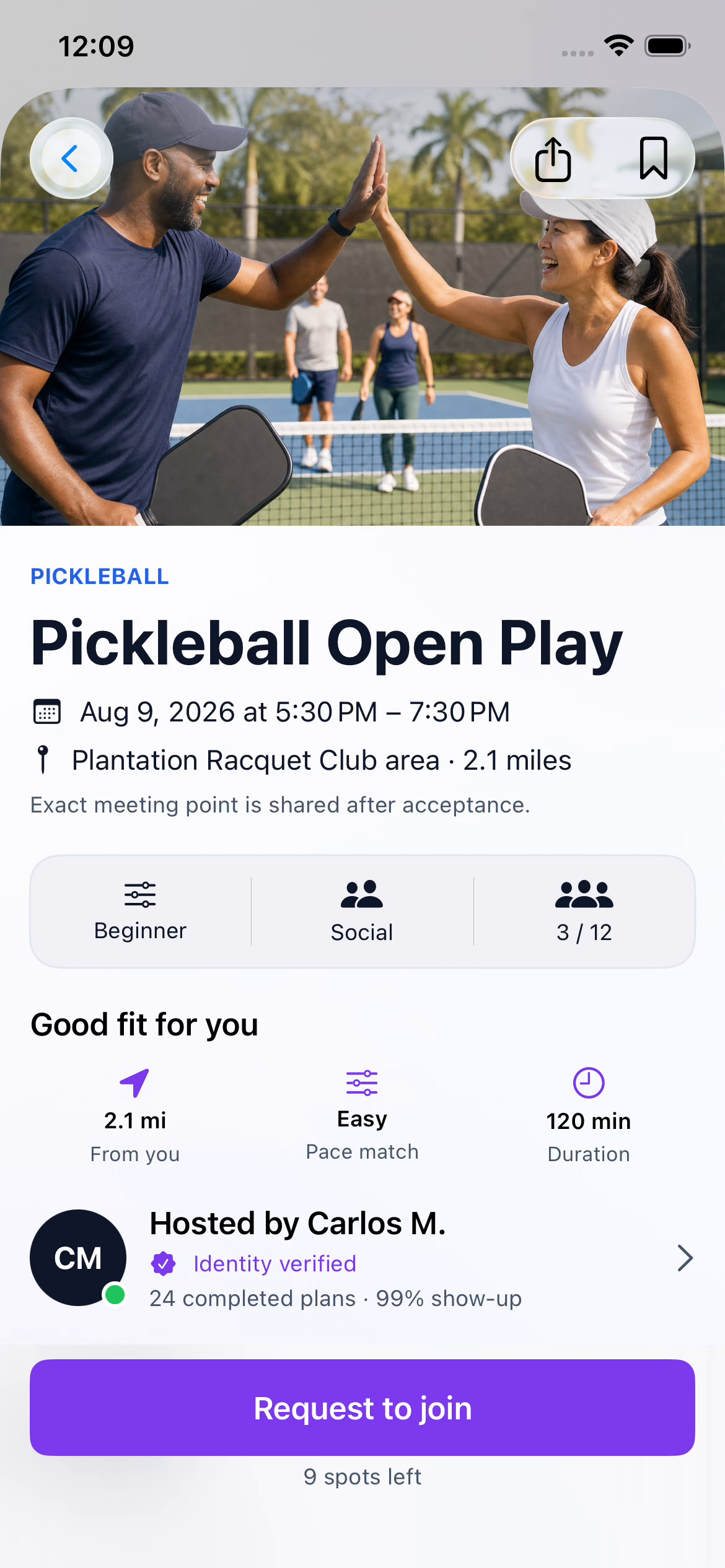
Plan details surface the practical signals that matter: when, where, pace, group size, and host credibility.
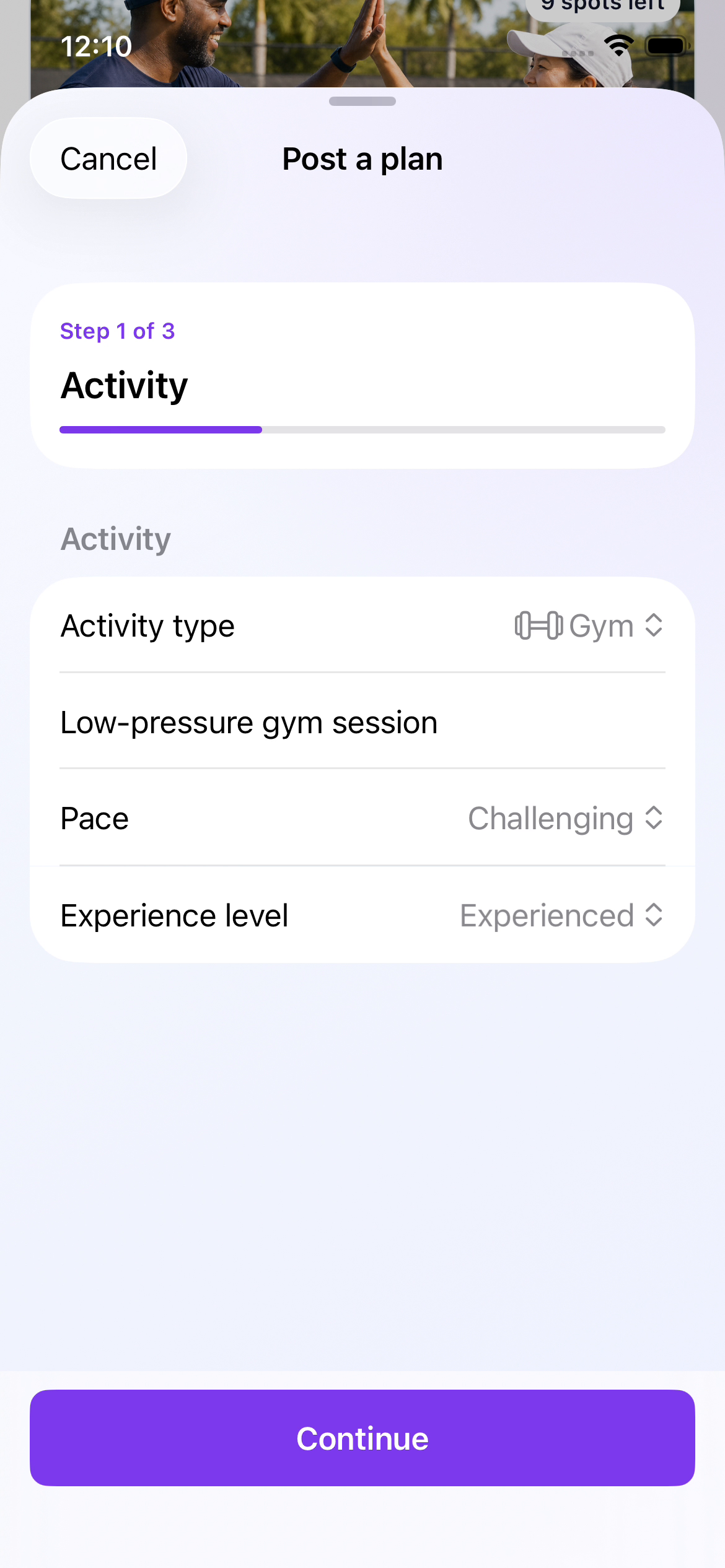
The creation flow is intentionally structured around activity, timing, location, and fit instead of event-management overhead.
The primary object is the activity plan. People become relevant because they are attached to something happening.
Distance, start time, duration, and pace help users decide whether a plan is realistically joinable.
Posting should feel like saying “I’m going” rather than creating a formal event.
Profile context, identity verification, location privacy, blocking/reporting, and community standards are treated as product features, not afterthoughts.
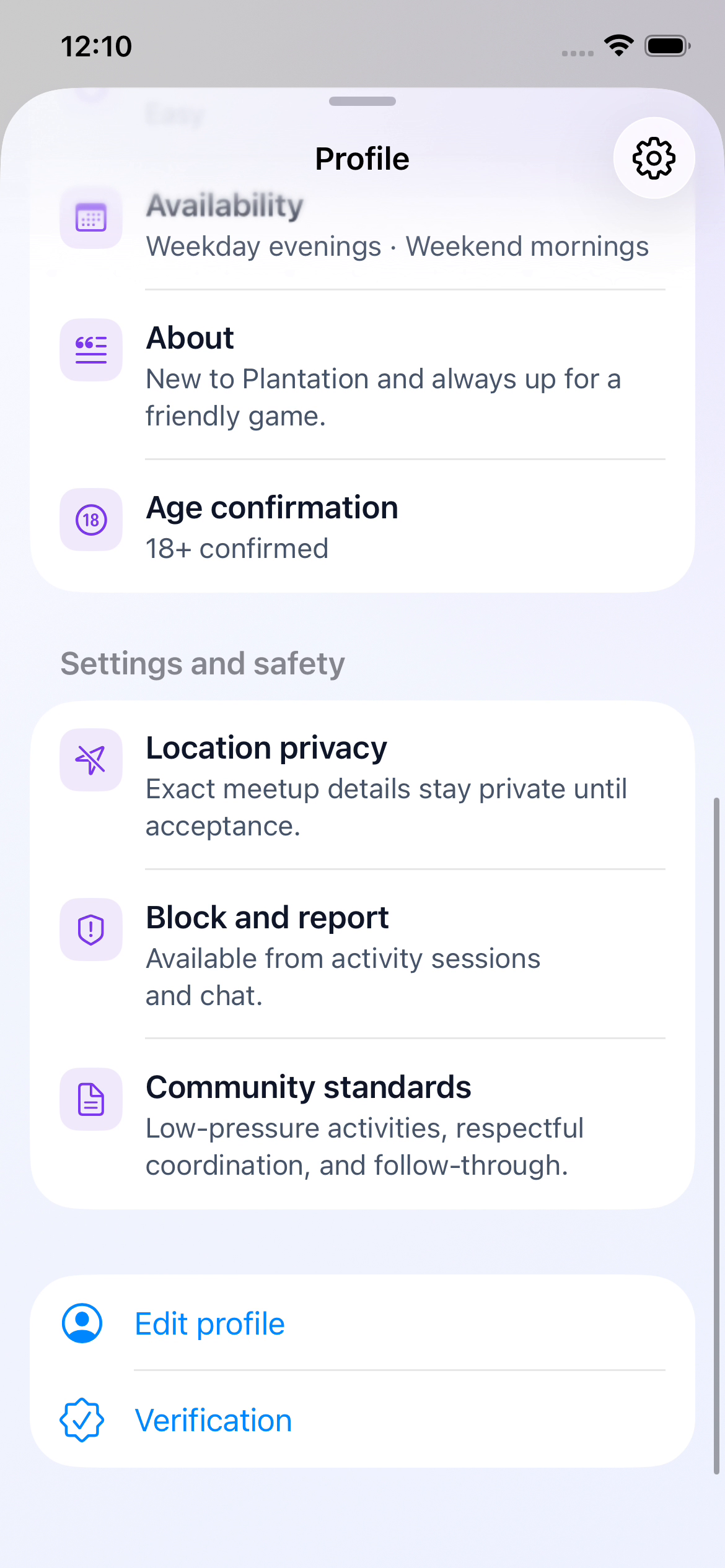
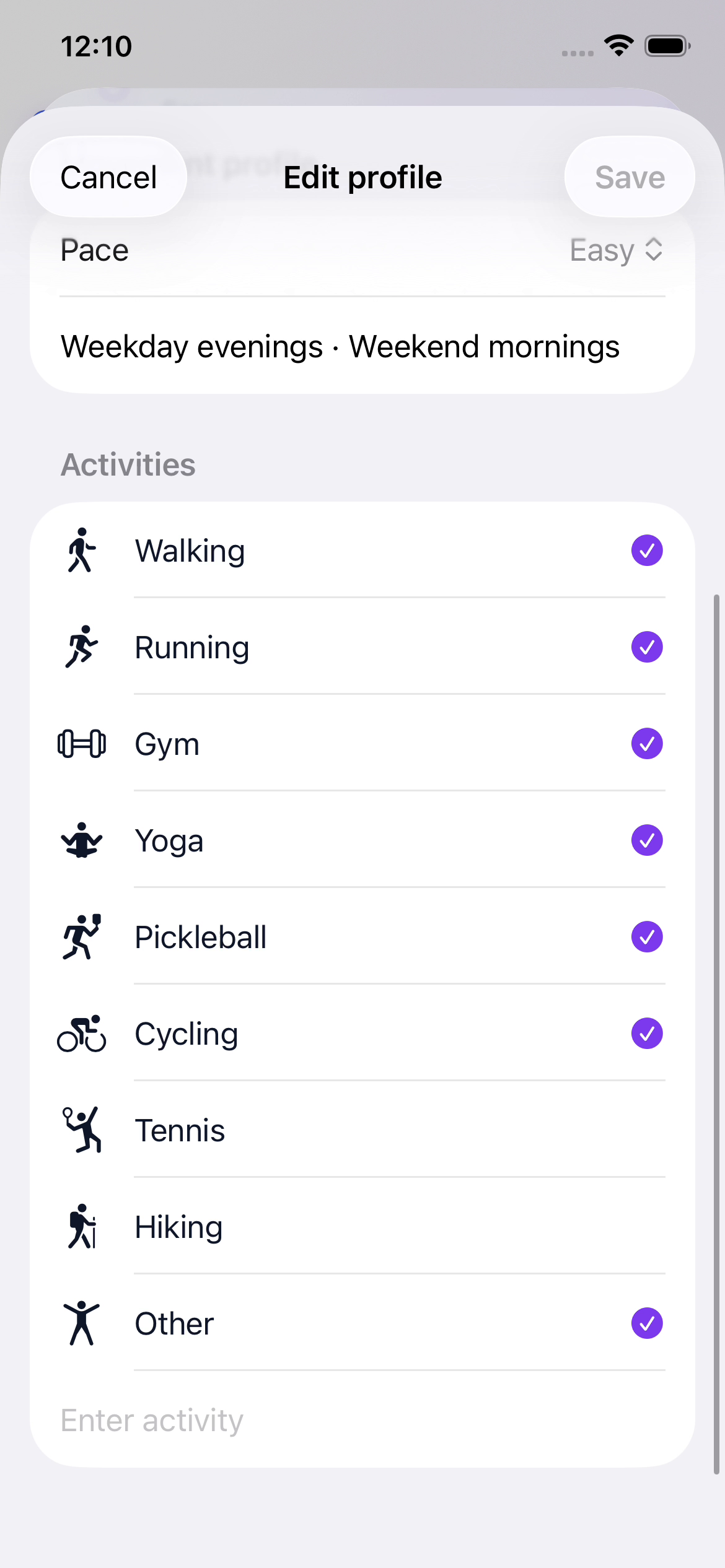
Clarified the core problem, MVP behavior, information hierarchy, and experience priorities before implementation.
Designed the native iOS flows and iterated on feed density, plan creation, joining, empty states, and trust patterns.
Used AI-assisted development to move from design intent to working product faster, then iterated through real simulator builds.
AI supported execution, but product judgment, prioritization, usability decisions, and visual quality stayed human-led.
It is a lightweight coordination layer for real life. The product becomes more useful when it reduces the distance between wanting to do something and having an actual person to do it with.
All Hatched helps founders, startups, and small businesses turn messy ideas and business problems into useful digital products, websites, and workflows.